Methylene Blue Injection/Open Joint Evaluation
INDICATIONS
 When there is clinical suspicion of communication between a traumatic wound and joint space
 When intra-articular air within the joint space is seen on radiographs
CONTRAINDICATIONS
 Evidence of overlying cellulitis on the site of arthrocentesis
 Patients taking serotonergic psychiatric drugs (risk of serotonin syndrome) and those having glucose-6-phosphate dehydrogenase deficiency (risk of anemia and methemoglobinemia) (FIGURE 49.1)
RISKS/CONSENT ISSUES
 Risk of iatrogenic septic arthritis
 Risk of iatrogenic hemarthrosis
 Allergic reaction to local anesthetic
 Pain during and after procedure
LANDMARKS
 In most cases approach is via the extensor surface of joints (avoids vessels and nerves)
 Specific landmarks should be utilized depending on the joint
 If available, ultrasound can be used to facilitate arthrocentesis
TECHNIQUE
 Prepare the Methylene Blue Injection
 Methylene blue usually comes in 1-mL ampoules. There are no exact dilutional guidelines; we recommend diluting 1 mL of methylene blue with 29 mL normal saline in a 30-mL syringe.
 Attach an 18- or 20-gauge needle to the syringe
 Prepare the Joint Before Injection
 Prepare the skin using either a povidone–iodine solution or a chlorhexidine solution and a large sterile drape
 Using a small-gauge needle, deposit a small wheal of either 1% or 2% lidocaine for local anesthesia
 Inject the Joint
 Enter the joint space using standard arthrocentesis technique
 Inject the methylene blue solution into the affected joint space until the joint is fully distended or methylene blue exudes from the wound
 The amount of solution necessary to fully distend the joint is mostly dependent on the joint in question
 The shoulder can hold ∼30 mL and the knee can hold approximately 60 mL
 Studies support injecting up to the maximum tolerated volume of the joint or until fluid begins to extravasate through the wound
 A positive test is considered if any extravasation of fluid is seen from the wound
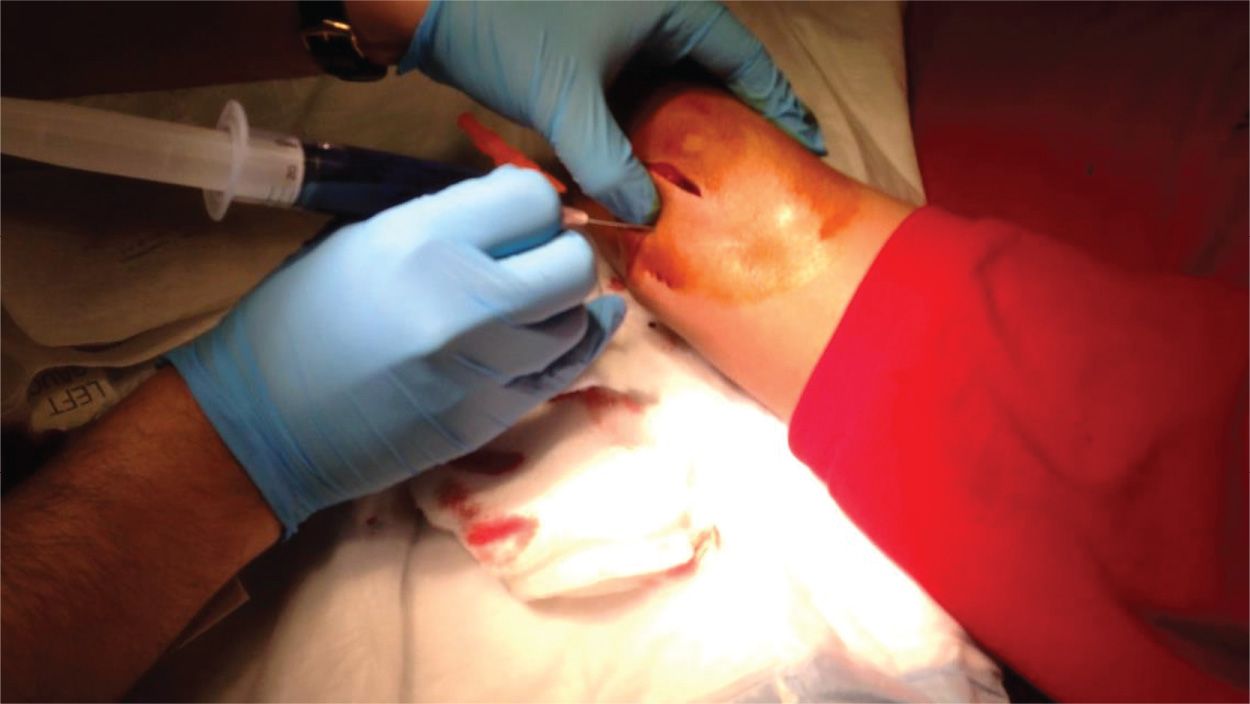
FIGURE 49.1 Arthrocentesis with injection of methylene blue dilution to assess traumatic arthrotomy in a patient with a deep laceration over the elbow. (Courtesy of Felipe Teran, MD.)
Related posts:



Stay updated, free articles. Join our Telegram channel

Full access? Get Clinical Tree


