Critical illness and intensive care unit admission are common occurrences in the immune-mediated inflammatory disease (IMID) patient cohort. This article specifically focuses on inflammatory rheumatic musculoskeletal disease within IMIDs. Understanding the aetiology, risk factors, co-morbidities, and management of these conditions in critical care are the key points discussed here. We have compiled the most common anti-rheumatic therapeutics in this article for management in these situations.
Key points
-
•
Frailty and co-morbidity, which are highly prevalent in inflammatory rheumatic musculoskeletal disease (iRMD), play major roles in the intensive care unit (ICU) critical illness prognosis.
-
•
Critical illness in iRMDs can pose challenges for diagnosis, disease assessment, and mortality prediction scoring tools.
-
•
Understanding the safety profiles and indications for common anti-rheumatic therapeutics is a vital skill for clinicians in the ICU.
Abbreviations
| APACHE II | Acute Physiology and Chronic Health Evaluation II |
| APRs | acute phase reactants |
| CVD | cardiovascular disease |
| DMARDs | disease modifying anti-arthritic drugs |
| ECMO | extracorporeal membrane oxygenation |
| GCs | glucocorticoids |
| IMID | immune-mediated inflammatory disease |
| iRMD | inflammatory rheumatic musculoskeletal disease |
| ILD | interstitial lung disease |
| JAKi | Janus Kinase Inhibitors |
| LODS | Logistic Organ Dysfunction System |
| LN | lupus nephritis |
| MAS | Macrophage activation syndrome |
| SAPS | Simplified Acute Physiology Score |
| SOFA | Sequential Organ Failure Assessment |
Introduction
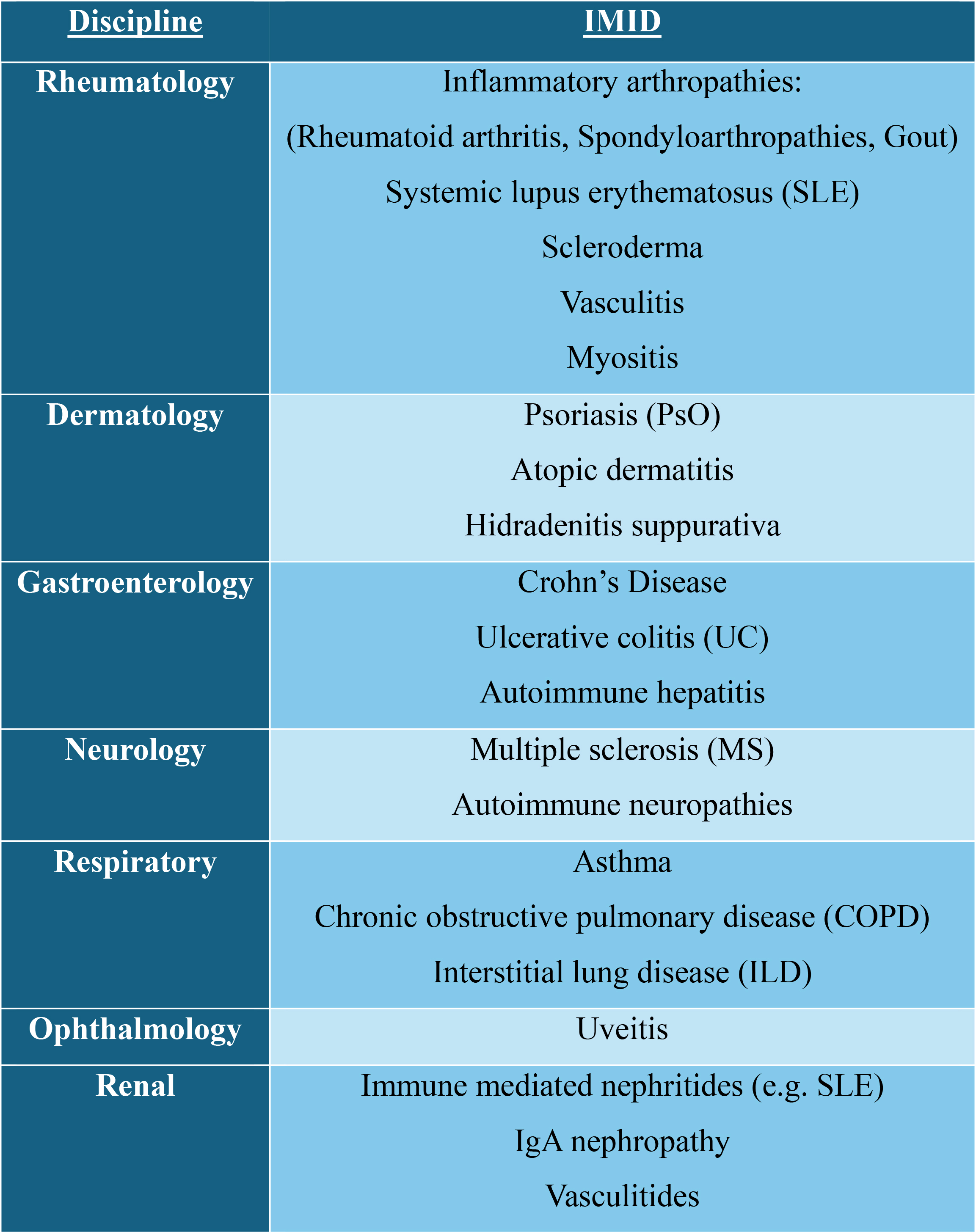
Immune-mediated inflammatory diseases (IMIDs) comprise a range of conditions that share common underlying etiology manifest by dysregulated inflammation and variably, by the presence of autoimmunity. IMIDs are clinically heterogeneous, usually associated with substantial morbidity and increased mortality, and impose a substantial burden on the individual, their families and wider society. IMIDs’ estimated prevalence is around 10% of the global population and, as such, they are frequently represented in the critically ill hospital population. The range of IMIDs across disciplines is depicted in Table 1 . IMIDs in general are associated with diminished effector immune-mediated defense, unstable immune homeostasis, with consequences for poor healing and delayed immune restitution after an infection induced immune response, and collectively are associated with poorer outcomes in the context of critical illness. They are usually chronic, exhibiting flare/remission patterns over time, with unpredictable trajectories, and as such accrued target tissue damage poses a further challenge in the context of critical illness. Consider for example, impaired renal function, pulmonary function, bone marrow reserve, mobility, sarcopenia. Finally, IMIDs are associated with substantial co-morbidity and multi-morbidity.
Table 1
List of IMIDs across disciplines
|
Abbreviation: IMRD, immune-mediated inflammatory diseases.
In addition to the challenges imposed by primary immune dysregulation, IMIDs share common risks inherent in immune suppression as a result of therapeutic interventions. The latter have been revolutionized in the last 2 decades. The field is quickly moving away from the use of broad-spectrum immune suppression, for example, methotrexate, gold, sulfasalazine, mesalazine, azathioprine, cyclosporin, and cyclophosphamide. Such medications offered some degree of efficacy across the range of IMIDs but were also associated with substantial toxicity and significant immune suppression, reducing host immune integrity with infectious consequences, and rendering vaccine and other prophylactic strategies suspect. Glucocorticoids (GCs) are of longest standing and represent perhaps the most perplexing of risk-benefit ratios in IMID management—overall their use is now focused on minimized dose administration for the shortest reasonable time.
The advent of biological therapeutics targeting pro-inflammatory cytokines, for example, TNF, IL-6, BlyS, IL-17A, IL-17F, IL-4, IL-5, type 1 interferons, and now upstream regulatory cytokines, for example, IL-23, has been transformative. To this armamentarium has been added cell targeting biological therapeutics, for example, B cell depleters that remove CD20, CD22, and CD19 cell subsets to variable degrees, and checkpoint regulators, for example, abatacept. Finally, an increasing array of oral selective immune modifiers are available, pioneered by the JAKinibs that inhibit proximal receptor Janus kinase family members, for example, JAK1, JAK3, TYK2. Remission can now often be achieved and maintained with long term drug administration and function and therefore tissue damage has been substantially reduced. This is a rich field of current drug development, and many more agents are anticipated in the next decade. Moreover, such immune selectivity has improved the tolerability and overall safety profile of immune suppression. However, the immune therapeutic revolution has not removed the primary risk of infection, usually with an odds ratio of between 1.5 and 2, nor indeed the risk of immune dysregulation in response to such insult. It is timely therefore to briefly review the main considerations posed by IMIDs to those responsible for critical care. Whereas the principles of management of the IMID patient who is critically ill are similar across disciplines, herein we will focus our article to inflammatory rheumatic musculoskeletal diseases (iRMD). Our purpose is to summarize the literature surrounding etiology, prognosis, predisposing factors and management of iRMD and critical illness.
Methods
A systematic search strategy was employed and implemented through Embase and Pubmed. The following search was undertaken: “(((Critically ill) OR (Intensive Care Unit) OR (High dependency unit) OR (Critical care unit) OR (sepsis) OR (septic) OR (life-threatening)) AND ((autoimmune) OR (immune mediated) OR (connective tissue disease) OR (Rheumatoid arthritis) OR (spondyloarthropathy)) AND ((DMARD) OR (Biologic))).” The inclusion criteria included meta-analyses, systematic reviews, standard approved guidelines and occasional high impact original articles/studies of relevance. The date range for the search was limited from January 2000 to February 2026. The research team also employed a systematic waterfall (cascade) approach to identify relevant studies.
Critical Illness and Immune-Mediated Inflammatory Diseases—Antecedent and Complicating Risk Factors?
Critical illness is a common complication of iRMDs. As many as one-third of hospitalized iRMD patients will require ICU admission. It is notable however, that a majority of IMIDs are treated in the out-patient environment and as such the in-patient cohort represents a more severely afflicted patient subset. Sepsis (61.6%) and infection (47%) are the most common etiologies of critical illness and ICU admission in iRMDs. Flare of iRMD itself (32.8%–48%) and cardiovascular events (33.9%) account for a further tranche of admissions. ,,
Occasionally, critical illness can be the precipitating cause for diagnosing iRDs and be the primary clinical presentation (10.9% in one single-center retrospective study). The purpose of this article is to compile the literature surrounding etiology, prognosis, predisposing factors and management of iRD critical illness, into a comprehensive and cohesive summary. Many factors might contribute to these admission rates. In particular, comorbidity, defined as the coexistence of at least 2 medical conditions occurring in one individual in which an index disease occurs first is found in up to 92% of iRMD patients admitted to the ICU and is a major contributor to prognosis and etiology for iRD-related critical illness. iRMDs are associated with numerous co-morbid conditions including increased risk of major adverse cardiac events, obesity, diabetes, mental health disorders, osteoporosis, and cancer incidence and prevalence. Accelerated immune system aging, or immunosenescence, is frequent in iRMDs and may also contribute ( Fig. 1 ).
Risk factors and adverse effects of critical illness in iRMD. Graphic depicting risk factors for developing critical illness in iRMD on the left side and adverse effects associated with critical illness in iRMD on the right side. iRMD, inflammatory rheumatic musculoskeletal disease.
(Designed using Freepik.)
In parallel, frailty is common in iRMDs, for example, occurring in as many as 23% of RA patients. Frailty and co-morbidity are often mis-defined and used interchangeably. Frailty has a number of defining features, namely by phenotype and index definitions. It can be defined as an indicator of aging and is linked to an increased risk of negative outcomes such as falls, injuries, and mortality with worse outcomes compared with their age-matched counterparts. Physiologic reserve significantly decreases in iRMD and is synonymous with the concept of frailty in this patient cohort.
Specific attention should be paid to CVD risks. iRMDs are strongly linked with increased prevalence and early onset of cardiovascular disease (CVD). CVD-related complications arise from immune mediated acceleration of atherosclerotic plaque formation and subsequent rupture. Circulating cytokines, acute phase reactants (APRs), immune complexes, and complement components are implicated. Moreover, lipoprotein assembly and composition are altered in iRMDs—for example, HDL loses its athero-protective properties,- as is cholesterol transport and metabolism. In parallel, acute CVD presentations such as pericardial disease, heart failure exacerbations and inflammatory cardiomyopathy may also represent a primary manifestation of iRMD. , A further CVD risk is iRMD-induced anemia, arising from immune-mediated erythropoiesis impairment, shortened erythrocyte half-life and blunted erythropoietin activity.
As an exemplar of the magnitude of risk, consider the COMORA trial that identified incidence rates of hypertension (40.4%) and hypercholesterolaemia in patients with RA (31.7%). Rates are probably higher still in SLE and systemic sclerosis. By corollary, a high index of suspicion for the presence of compromised CV function in iRMDs should be assumed in the critically ill.
Cognitive dysfunction from iRMD can manifest as impaired orientation, attention/concentration, judgment/problem solving and memory, verbal, visual/spatial and executive functions. Cognitive impairment as a comorbidity negatively impacts patient prognosis in critical care. Delirium leads to higher risk of mortality, length of stay, higher costs, poor mental health, and functional disability in ICUs. RA with dementia shows poorer cognitive function and an increased mortality risk when compared with non-RA dementia cohorts.
Other studies have linked the presence of iRDs with a higher rate of impairments across a range of cognitive domains. Long-term treatment with disease modifying anti-arthritic drugs (DMARDs) such as MTX and GCs have been variously reported to contribute to this dysfunction both positively and negatively. Recently, we proposed the existence of a brain joint axis that integrated immune, endocrine and neurologic pathways that combine to alter mental health and cognition in iRMDs.
This axis is mediated by and number of effector mechanisms. Thus, excess levels of circulating proinflammatory cytokines (such as IL-6, IL-1β, TNF-α) may cross a vulnerable blood brain barrier to drive microglial activation and consequent neuronal dysfunction, altered neuroplasticity and altered nuclear connectivities. Migrating cell lineages, especially of myeloid origin may also migrate to the brain and participate in cognitive decline. Similarly, autoantibodies may be implicated in the pathogenesis of this cognitive decline through neuroinflammation and neurotoxicity driven in the cerebral parenchyma. The critical consequence of this emerging and compelling component of IMID pathogenesis is that evaluation of cognitive function and consciousness in the critically ill patient should be considered to be challenging in the context of iRMDs and a high level of vigilance to the contribution of underlying inflammatory disease, as opposed to that driven by metabolic, fluid shift, hypoxic, and other ICU stressors should be maintained.
Finally, iRMD patients are particularly prone to osteopaenia, osteoporosis, fragility fractures and poor bone health. Osteoporosis is reported to be twice as common in patients with RA as in the general population, presenting in 30% to 50% of all RA patients. , This is multifactorial in nature, but occurs more often in iRMD patients with high disease activity (increased inflammation), varying BMI, female predominance, decreased mobility, and treatment history with GCs. , Systemic iRMDs such as SLE are particularly at risk. Though of less importance in the acute setting, bone health becomes a critical element of longer-term rehabilitation post-ICU discharge, especially in the context of significant sarcopenia.
Factors that Predispose to Becoming Critically Ill
As noted, life-threatening illness in iRMD has a number of etiologies, including iRMD flares, superimposed infection from immunosuppression, adverse effects of therapeutics, malignancy secondary to medication and secondary illness unrelated to yet exacerbated by iRMDs. RA and systemic inflammatory diseases (formerly connective tissue diseases) are considered to be the most common iRMDs to develop critical illness and necessitate ICU admission. , Rheumatologic specific emergencies include Pulmonary-Renal Syndrome, Sclerodermal renal crisis, Macrophage activation syndrome (MAS), and Catastrophic antiphospholipid syndrome, and all have a high associated mortality.
Long-term effects of immune-mediated inflammatory diseases and physiologic reserve
The basis of IMID pathogenesis circulates around chronic inflammation and consequent accrual of progressive injury to multiple-organ systems. End organ damage is prevalent among all iRMDs and should be assumed to extend well beyond signature target organs to include major organs and their functional reserve. Thus, the respiratory system, kidneys, gastrointestinal tract/liver and blood/coagulation are most frequently affected systems at the time ICU admission and all should be considered potentially compromised a priori by coincident iRMD.
Physiologic reserve is negatively affected by accrued end-organ damage. This decrease predisposes to acute decompensation when faced with stressors such as infection, inflammatory flares, and surgery. Impaired functional reserve increases the risk of ICU admission and worsens prognosis in iRMD. Functional reserve also significantly decreases in iRMD patients following discharge from critical care. Some studies have reported, a 1 year mortality of ∼30%.
Cardio-pulmonary end-organ impairment
Pulmonary involvement encountered in patients with iRD bears clinical significance in terms of increased morbidity and mortality. Interstitial lung disease (ILD) is a major morbidity/mortality risk among the RA and SLE patient cohorts. Restrictive lung conditions that stem from iRMDs significantly predispose to rapid deterioration of end-organ function. One multi-center study found respiratory failure to be the leading cause of ICU admission in critical iRMD patients (56.8%). ILD may not be clinically obvious—for example, up to 58% of RA patients have been reported to suffer from RA-ILD at some level, usually sub-clinical and undetected, but nevertheless carrying potential for functional significance in the event of ICU admission
In addition to the accelerated CVD morbidity described above, iRMDs, best exemplified in RA and SLE, typically may manifest cardiac impairment as part of the primary disease syndrome, through valvular impairment, cardiac arrhythmia, cardiomyopathy, pericardial disease, and heart failure. The most numerous causes of ICU admission and critical illness in this population are coronary events linked with iRMDs. At the coronary artery level, endothelial dysfunction in large and small vessels can lead to ischemic heart disease, either secondary or not, to atherosclerosis.
Renal end-organ impairment
Renal disease is common in iRMDs and carries adverse prognostic implication in the critical care setting. However, variations are apparent in reported prevalence of renal disease in iRMDs, with older studies showing higher rates and newer evidence showing improvement (likely from tighter DMARD control and monitoring enhancements). One study states that 18% of iRMD patients have stage 3 CKD or poorer, in comparison to 5% in the general population. , The MATRIX study showed that RA patients present with stage 2 (20%–20.3%) and stage 3 (15%–24.1%) kidney disease. Some studies report as low as 5% prevalence in RA patients. Some reports state that acute renal failure is the most common organ failure among the critically ill iRMD patients in ICU.
The etiology of renal end-organ impairment stems from a wider range of factors including the use of NSAIDs, DMARDs and other immune modulator therapeutics that have nephrotoxic adverse events, secondary renal amyloidosis, progressive glomerulonephritis, immune complex deposition and others. Consider that lupus nephritis (LN) will develop within 10 years of SLE diagnosis and in turn, 5% to 20% of patients with LN develop end-stage kidney disease.
Effects of therapeutics on the likelihood of becoming critically ill
The therapeutic protocols used most widely for iRMDs are defined in international recommendations and guidelines published by international societies such as EULAR and ACR. Such approaches, combined with the strategic evolution of iRMD treatment to embrace “Treat to Target,” whereby therapeutics are escalated until disease activity is minimized, has on balance driven a more aggressive use of DMARDs, biologics, corticosteroids and other immunosuppressants. This has had beneficial impact on clinical outcomes for the iRMDs, and indeed reduces attendant co-morbidities associated with iRMDs. However, these approaches modify host defense immunologic pathways and may in the ‘wrong context’ predispose to accelerated critical care presentation and progression. In one analysis, iRMD patients in ICU settings were found to be on GCs (66%), DMARDs (18%), immunosuppressants (16%), and anti-TNF drugs (6%), respectively. ,
Conventional use of immunosuppressants (eg, azathioprine, cyclosporin, mycophenolate, cyclophosphamide), are associated with opportunistic pathogens potentially resulting in critical illnesses secondary to infection.
GCs are very effective in treating iRDs, specifically in acute flares, but significantly increase the likelihood of becoming critically ill by masking inflammatory symptoms. GCs risks accrue especially in patients receiving long-term oral doses above 7 mg/day (prednisone equivalent). ,
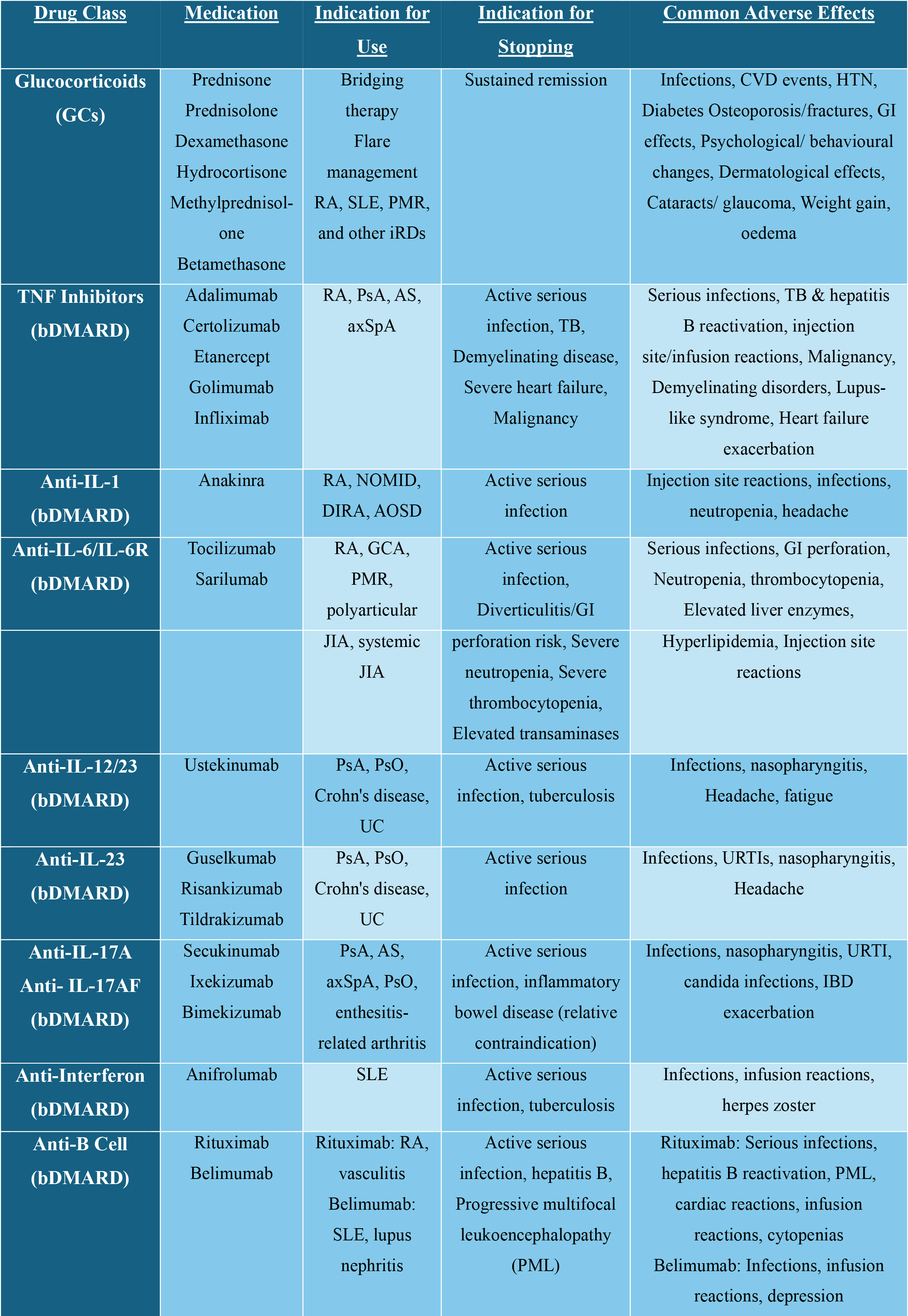
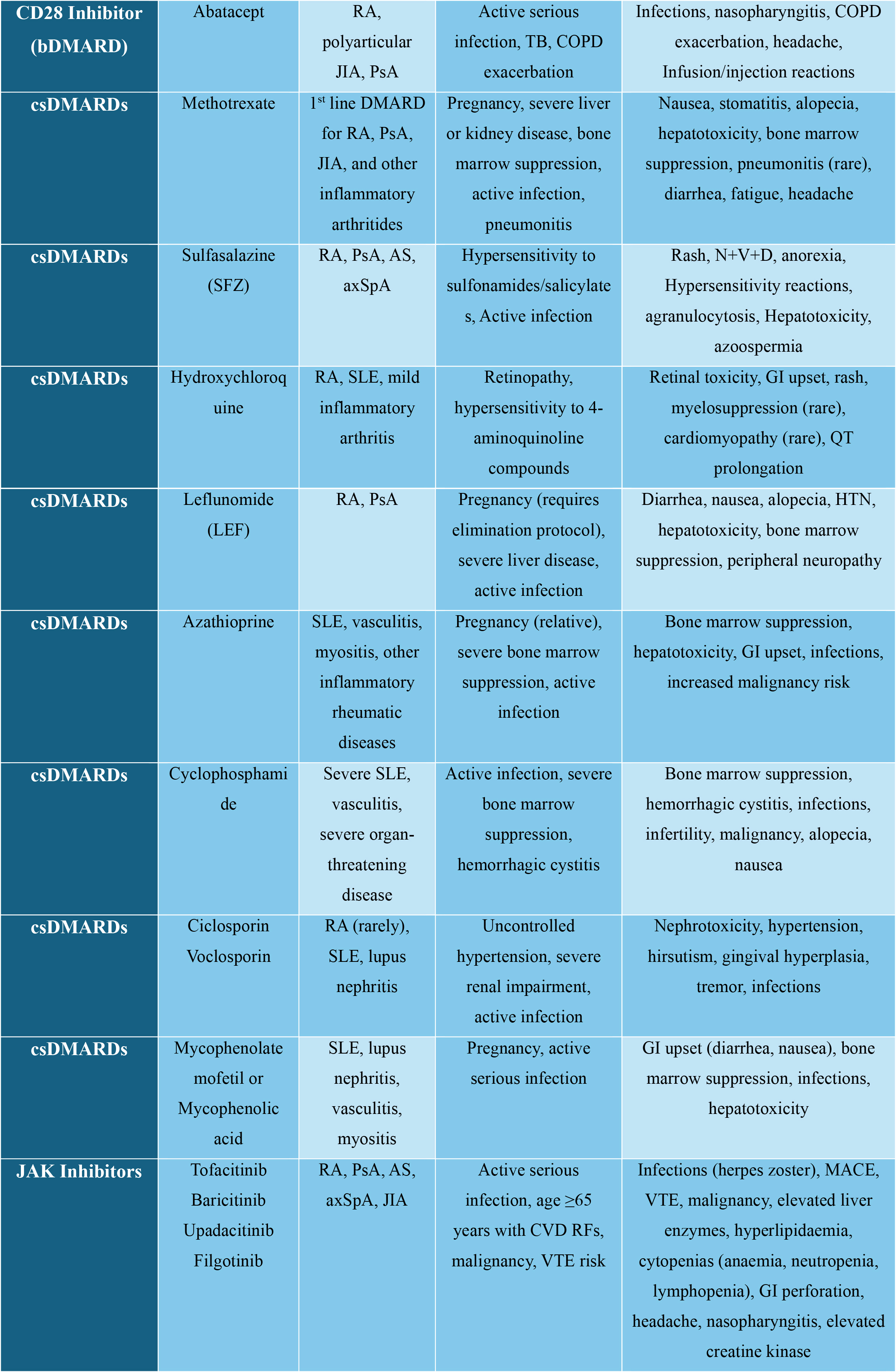
Biological and targeted synthetic DMARDs ( Table 2 ) are variously associated with increased infection risk and as such will increase the likelihood of critical illness. There is however a curious relationship for TNFi whereby the risk of ICU admission is increased by this drug class, but survival once admitted is better in those on TNFi at admission. These data emphasize the ying-yang of immune mediated tissue damage and organ failure balanced with essential immune defense.
Table 2
Summary of the most commonly used anti-rheumatic medications for the management of iRDs and their associated drug class, indications, and adverse effects ,,,,
|
Abbreviations: AOSD, adult-onset Still’s disease; axSpA, axial spondyloarthritis; DIRA, deficiency of the interleukin-1 receptor antagonist; JIA, juvenile idiopathic arthritis; MACE, major adverse cardiovascular events; NOMID, neonatal-onset multisystem inflammatory disease; PMR, polymyalgia rheumatica; VTE, venous thromboembolism.
There are interactions also between the pathogenetic effector pathways of iRMDs and relevant therapeutics. For example, RA is associated with developing septic arthritis; greater than 35 times greater likelihood. This is attributed to joint damage, immune defense vulnerability arising from RA pathogenesis, treatment with corticosteroids, DMARDs and biological therapies.
Side effects of treatment may also be idiosyncratic, for example, methotrexate (MTX) can induce MAS in RA.
Finally, there is an indirect relationship between biological and tsDMARD therapeutics via altered vaccine efficacy, which, in turn, increase infection risks a priori. The most remarkable effects are those mediated by rituximab. However, MTX, abatacept, JAKinibs and TNFi reduce vaccine induced protective antibody titers, though this correlates poorly with protection.
Impact of Inflammatory Rheumatic Musculoskeletal Diseases on Disease/Mortality Evaluation
Mortality rates in critically ill iRMD patients vary across studies. One retrospective study found that the 5 year survival in RA patients after ICU admission was 47%, and 30 day, 90 day, and 1 year mortality rates were 22%, 27%, and 37%, respectively. However, other studies suggested either no prognostic difference, or an increased mortality rate.
Sepsis and systemic autoimmune inflammatory disease flares share very similar clinical presentations and can be difficult to distinguish in critical care settings. Even with extensive use of conventional clinical, blood-based and imaging tools, it can be a challenge to accurately come to a definitive diagnosis.
Critical illness scoring systems
Clinical severity tools such as Sequential Organ Failure Assessment (SOFA), Simplified Acute Physiology Score (SAPS), National Early Warning Score (NEWS), Acute Physiology and Chronic Health Evaluation II (APACHE II), Mortality Probability Model, and Mortality in Emergency Department Sepsis are all utilized in the ICU to evaluate mortality risks and prognoses. The most common validated severity scoring systems used in unwell ICU patients are designed for the general population as opposed to those with iRD.
Common scoring systems such as APACHE II, have demonstrated high score correlation with a higher predictive estimation of mortality in iRD patients. , ODIN and APACHE II are good predictors for iRD patient mortality in the ICU. SOFA scores can be unreliable, as one study found some accurate correlation with crude mortality, but underestimated short term mortality overall. Another study showed that the mortality rates (16%) observed were in alignment with expected mortality rates associated with their values on their SAPS2 and Logistic Organ Dysfunction System (LODS) scores. The LODS score assesses organ failure severity in ICU patients and may be a useful predictor of 30 day mortality in the critically ill iRMD patient.
Specific but less commonly used tools exist that are only of tangential value as they do not directly address the prognostic challenge. The Rheumatic Disease Comorbidity Index measures mortality with co-morbidity in iRMD.
The CORAL score has shown promising results to identify high risk serious infection in iRMD patients, in those with prolonged high-dose GCs.
Specific scoring systems depicting iRMD disease activity at a given timepoint, such as the Disease Activity Score with 28-Joint Counts, SS Disease Damage Index, and Systemic Lupus Erythematosus Disease Activity Index are widely available but evolved to support clinical trial and clinical monitoring of iRMD disease activity.
These are not specifically used for assessing prognosis or mortality.
Acute phase reactants
APRs such as CRP, SAA, and ESR are standard biomarkers for assessing inflammatory responses in critically unwell and septic patients. Skewed interpretation of severity scores that utilize these APRs can occur, leading to misrepresentation, especially in the critically ill in which either infection or iRMD activity could theoretically drive their elevation. IL-6 levels are associated with iRMD flares. Combining SAPS with IL-6 concentrations may offer more accurate risk stratification in iRMDs. Caution should be exercised in the interpretation of APRs in patients receiving drugs that inhibit IL-6R, for example, tocilizumab or its proximal signaling, for example, JAKinibs. They may normalize APRs as a pharmacodynamic effect of hepatic IL-6R signal inhibition, independent of true clinical improvement. ,
Procalcitonin is a proposed differentiator between disease flare and bacterial sepsis, particularly in comparison with general inflammatory markers like CRP and ESR. It has greater specificity and sensitivity in JIA and SLE. Additionally, procalcitonin with presepsin may offer strong diagnostic potential for differentiating iRMD flare from bacterial sepsis. Albumin has long been considered a prognostic indicator of mortality, length of stay, and re-admission in ICU patients. Although serum albumin levels inversely correlate to IMID activity, they also correlate with septic and critically unwell ICU patients, so it is not recommended as a reliable differentiator.
Therapeutic Mx of iRDs in Context of the Critically Ill
Diagnostic challenges
Determining whether critical illness is co-existent with iRMD, or directly arising from iRMD exacerbation, is a fundamental step in management planning. Understanding that these presentations can occur simultaneously is a valuable insight for responsible clinicians. Early identification and admission to ICU, with multidisciplinary management for these patients allows for a more favorable outcome.
General considerations around immune modulators
Guidelines surrounding immunomodulatory agent use in iRMD-associated infection is generally to withhold these agents temporarily, unless there is a pressing iRD flare that is coincident. Balancing the benefits of immunosuppressive therapy for iRMD flare management, with the risk of superimposed infection is a major challenge faced by in ICU, and best practice is still debated. However, 30 day mortality in those treated with immunosuppressive therapy has been shown to be acceptable in this cohort and not consistent with an increased risk of severe infection, matching the expected mortality rate.
An argument can be made that organ failure associated with acute flare is the main driver of acquired infection in ICU admitted iRMD patients, as opposed to immunosuppressive treatments. Secondary organ failure predisposes to acquired infection through impaired immune function. In one retrospective study, fear of acquired infection should not prompt withholding in-ICU use of immunosuppressants. There are however conflicting approaches, and further research is required. At present therefore clinical judgment is vital and communication between ICU and iRMD specialists essential. There are extensive recommendations and points to consider offered by EULAR ( https://www.eular.org/recommendations-home ) and ACR ( https://rheumatology.org/clinical-practice-guidelines ).
Glucocorticoids
Related posts:
 Post-Sepsis Syndrome after Critical Illness
 Antimicrobial Resistance in Patients with Sepsis
 Principles of Immunotherapeutic Drug Discovery for Severe Infections Using Extreme Phenotypes
 Sepsis and the Immunocompromised Host
 The Immunometabolic Architecture of Sepsis
 Real-time Subgrouping of Sepsis and Systemic Inflammatory Syndromes

Stay updated, free articles. Join our Telegram channel

Full access? Get Clinical Tree